

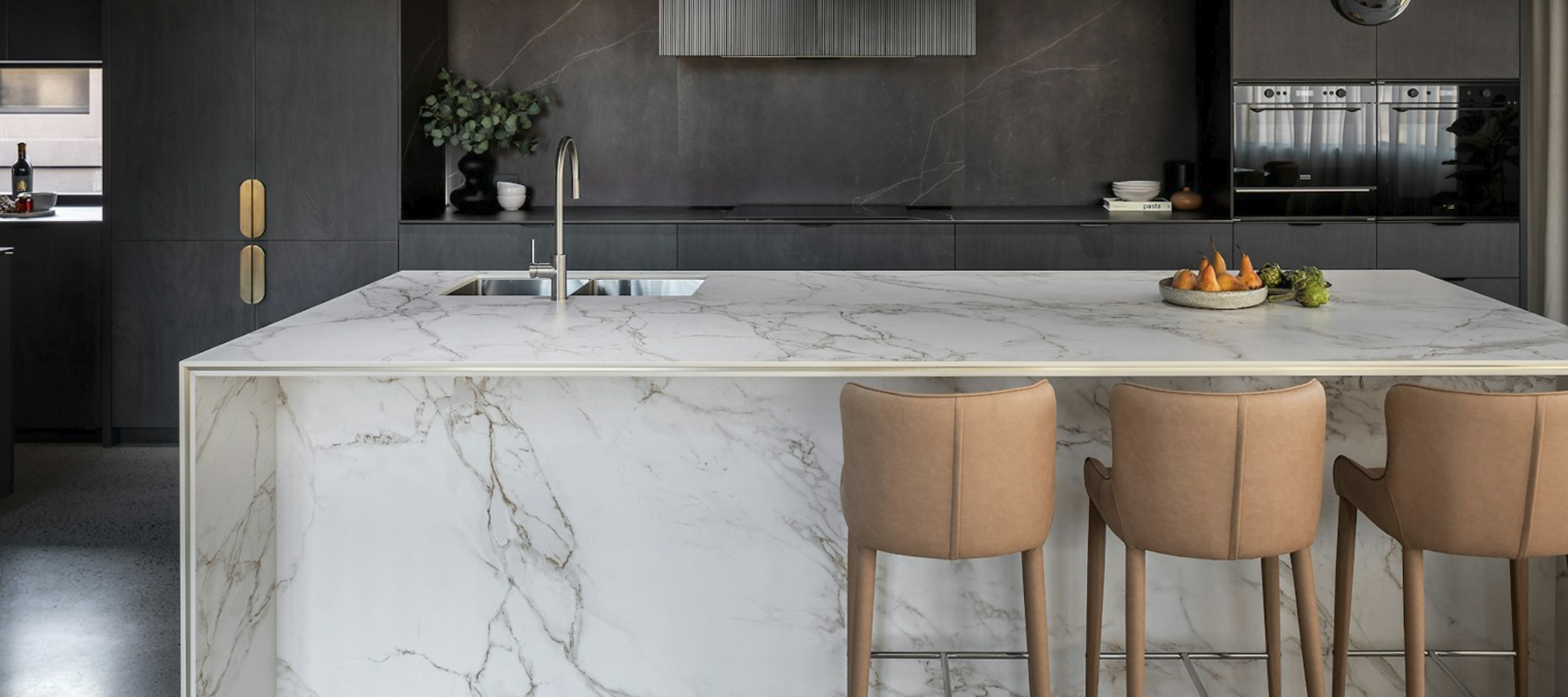
Stone Work Surfaces
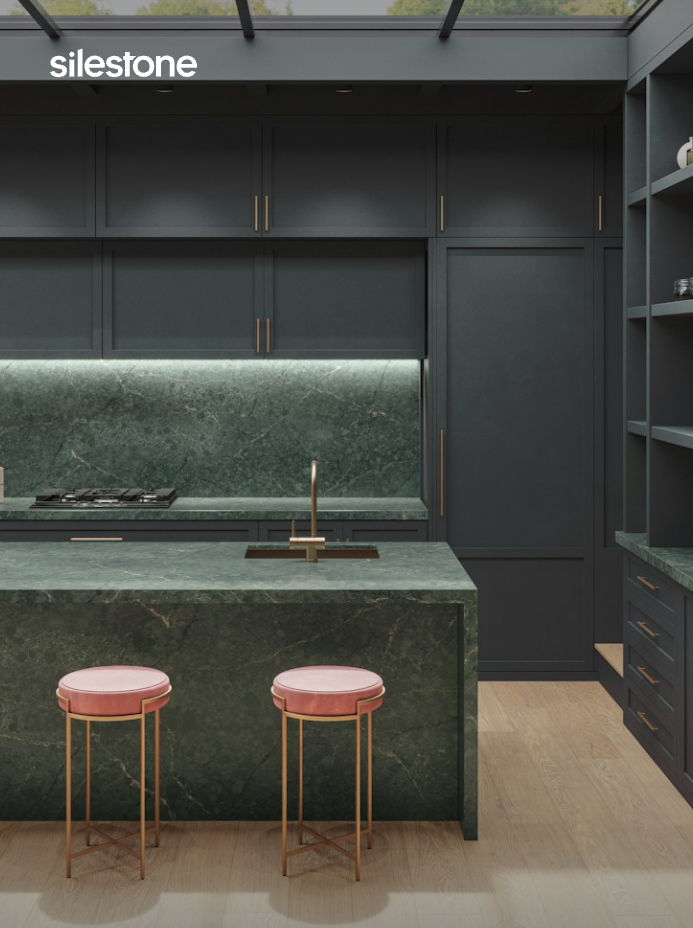
Quartz (Engineered Stone)
Pros:
Non-porous surface, Resistant to staining.
Low maintenance: No sealing required (unlike natural stones) and easy cleaning.
Wide variety of colours, patterns and finishes (manufactured variety gives design flexibility)
Good durability for everyday use: resistant to scratches and water damage.
Cons:
Heat sensitivity: Because quartz slabs are mixed with resins, they are not immune to heat damage
(hot pans/hot items can cause scorch, discoloration or damage).
Limited outdoor use: UV exposure and outdoor elements can lead to fading/discolouration or degraded performance.
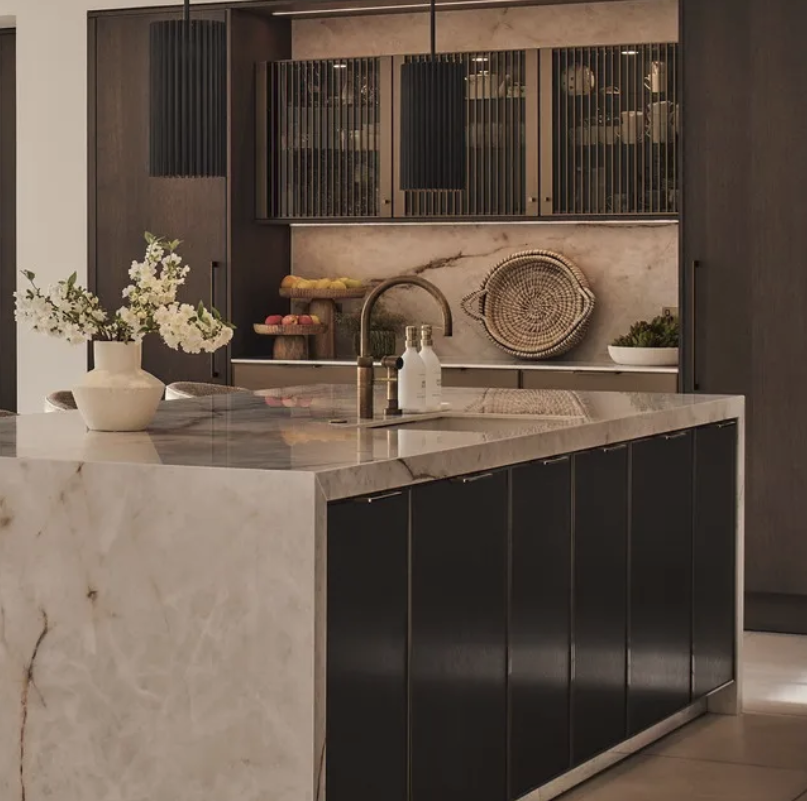
Porcelain (Sintered Stone)
Pros:
Exceptional heat resistance: Can handle high temperatures without scorching or damage, better than many engineered quartz options.
Excellent scratch/abrasion resistance and chemical resistance.
Non-porous and also suitable for outdoor use (UV-stable, weather-resistant), making it versatile for both indoor and outdoor settings.
Variety of finishes and looks, including mimicking natural stone, marble, concrete and metal.
Cons:
Brittleness/chipping risk:
Some users and fabricators report that while extremely hard, the material can chip (especially at edges) if there’s impact or improper fabrication/handling.Cost and installation: It can be more expensive (especially fabrication/installation), and because of its stiffness/brittleness, handling and cutting require expertise
Because it’s very hard/brittle, it may be more challenging to fabricate complex shapes/seams. Installer skill matters.